When President Obama鈥檚 national address to students approached in September, many parents expressed concerns over the potential of politically charged messages. Before his speech notes were revealed, school communities feared that Obama would try to sway students towards his political viewpoints by subtly mentioning key national issues, such as healthcare reform and economic stimulus plans. Although the speech was surrounded in controversy, in post-speech reviews, bipartisan parties generally agreed that President Obama鈥檚 lecture was non-biased and inoffensive.
Regardless, the heated debates leading to the president鈥檚 speech forced many parents and leaders to pose the question: do parents have the right to deny or allow public speakers at their child鈥檚 school?
Public School Speakers: Who Chooses Them?
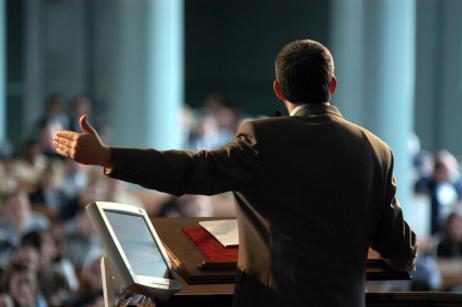
While public schools across the country frequently invite speakers to their campuses, some parents argue that booking these speakers without parental consent could be harmful for students. For example, many conservatives, as well as individuals who oppose some of President Obama鈥檚 key political philosophies, feared that allowing their children to listen to the president鈥檚 national address in the public school setting was a violation of their parental and personal rights. Wanting to protect their children from opposing viewpoints, many parents were outraged over Obama鈥檚 public school speech, which was aired and widely viewed by public school students during regular school hours.
In examining this controversy, the reported that 鈥淒istricts across the country (were) inundated with phone calls from parents鈥truggling to address the controversy that broke out after Education Secretary Arne Duncan sent a letter to principals urging schools to tune in.鈥� Many conservative celebrities, including news reporters, radio show hosts, and popular bloggers, encouraged families to prohibit their children from viewing the president鈥檚 address; some right-winged advocates argued that Obama was aiming to promote his own political agenda by overstepping the appropriate boundaries separating the federal government from a public school classroom.
Among some of the districts to specifically ban the airing of the speech were schools throughout the states of Texas, Minnesota, Missouri, Virginia, and Illinois. Yet, even in these select states, many school and political leaders allowed principals, parents, and/or teachers to make the ultimate decision about whether or not children could watch the speech during class time.
More Controversies Surrounding Public School Speakers
Obama鈥檚 national student address is only one case of controversy surrounding public school speakers. Across the nation, other controversial speakers are sparking criticism amongst parents and community members.
For example, as reported by the News and Observer, parents were outraged after a Christian evangelist was invited to speak to a North Carolina public school. Located in Wake County, an Enloe High School social studies teacher invited the Christian evangelist Kamil Solomon to speak to students to open the kids鈥� minds to 鈥渟ee more light.鈥� According to reports, the teacher 鈥渋nvited Solomon to several of his social studies classes Feb. 16, and Solomon asked students to embrace Christianity and distributed pamphlets denouncing Islam.鈥�
Upon viewing the pamphlets and hearing about the content of the speaker鈥檚 address, many parents in the community were outraged and offended. Opponents to Solomon鈥檚 speech argued that his address violated the Constitution鈥檚 First Amendment, which specifically prohibits the endorsement of religion in public schools.
How Can Parents Be Involved?
If you are concerned about whom your child鈥檚 public school invites to speak to the students, you can get proactively involved. Parents are encouraged to investigate their child鈥檚 public school policies regarding parental input on the choice of speakers and content of topics addressed. Each school, district, and/or county has its own regulations and guidelines regarding their rights to invite guest speakers, as well as the rights parents possess in this facet. Parents concerned about guest speakers and their potentially offensive or debatable content can contact local school and district officials to find out what choices are available to parents.