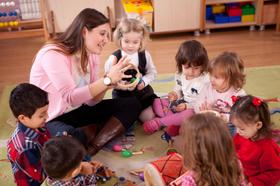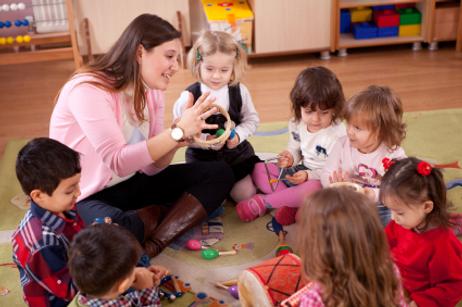
Could public preschool benefit your children? The school districts in Georgia and New York do, and they subsequently have created a universal preschool curriculum for four-year-old students.
While many parents, teachers, and communities debate the benefits of a public-wide preschool, many states are considering mandated and/or government-supported programs for young children and families.
Why the Public Preschool is Gaining Attention
Political Base states:
鈥淪tate-funded public preschool is usually a means-tested program that provides early education to 3 and 4-year-olds. The goal in providing subsidized public preschool for low-income families is to provide a stable environment for young children during a crucial age of development.鈥� Essentially, since lower-income families cannot always provide sufficient child care, 鈥渢heir children would be left at home. For many, this means unstable environments and T.V.s instead of teachers. It may also force single parents to stay home to raise children instead of work.鈥�
As a result of these struggles, many states are implementing government-funded schools and educational programs to provide lower-income families with added assistance. Building on this framework, the state-mandated preschool programs are also ideally intended to provide families of all financial backgrounds with more supportive educational options for children of a younger age.
The Benefits of Preschool
One of the most significant benefits of publicly mandated preschool programs is ensuring that lower-income families have opportunities to enroll their children in early education programs while saving on the often expensive costs of preschool and childcare programs. As policy analyst Darcy Ann Olsen also supports, 鈥淢ost advocates of public preschool argue that early schooling of low-income children is an investment that pays off in the long term by reducing the number of children who will perform poorly in school, become teenage parents, commit criminal acts, or depend on welfare. Other advocates of public preschool see it as a way to subsidize child care.鈥�
This video entitled Make the Most of Every Minute in Your Preschool Program gives us an overview of what's involved in a preschool program.
To ameliorate these widespread social issues of lower-income family access to resources, education, and child care, the early education program 鈥淗ead Start,鈥� formed in 1965, has helped provide researchers with insight into the advantages of early education programs for young kids. 鈥淗ead Start鈥� has provided child care and education services to children from low-income families and homes. Research and reports say, 鈥淭he benefits of early education are well known. It impacts how long children stay in school and whether they turn to crime.鈥�
Adding to this research, a study and analysis from the National Institute for Early Education Research assert that 鈥渢here are real, measurable returns for money spent on quality, full-day, year-round preschool.鈥� At the same time, James Heckman, one of the University of Chicago鈥檚 economists, 鈥渉as found a huge cost-benefit advantage in decreased jail time for poor children who attend preschool. Preschool, in general, can lead to higher IQs, better self-esteem, and fewer behavior issues.鈥�
Specifically, according to 鈥淗ead Start,鈥� children enrolled in early education programs receive a variety of benefits, such as: 鈥渟chool readiness by focusing on the child's development in language and literacy, early math, social skills, self-help, nature, and science; daily nutritious meals; close review of a health history; active 鈥榟ands on鈥� involvement in learning.鈥� In addition, families also benefit from a child鈥檚 early education, as parents are provided with 鈥�opportunities to be involved in your child's education; the encouragement to be self-sufficient; the promotion of family literacy,鈥� among many other diverse benefits as well.
The Cons of Public Preschool Programs
Many states have universal preschool programs, including Georgia, Florida, New Jersey, Oklahoma, and others. While many argue that these programs are universally beneficial, adversaries argue that the public preschool initiatives only target and benefit poor and lower-income families. Adding to this, Political Base presents, 鈥淐ritics say the state should not expand education when so many of the country's public schools are failing. Taxpayers should not pay for services they may not be using.鈥� For example, Georgia and Oklahoma鈥檚 implemented programs from the 1990s have not yet provided enough substantial information to prove their successful outcomes.
This video looks at the pros and cons of public preschool programs.
Darcy Ann Olsen, an entitlements policy analyst at the Cato Institute, argues in her article 鈥淯niversal Preschool is No Golden Ticket鈥� that public preschool programs are not proving to be worth the costs and investments: 鈥淓xperience provides little reason to believe universal preschool would significantly benefit children, regardless of family income. For nearly 40 years, local, state, and federal governments and diverse private sources have funded early intervention programs for low-income children, and benefits to the children have been few and fleeting.鈥�
Olsen argues that the lack of research, support, and success for these programs makes the universal requirements unnecessary. Furthermore, not only does Olsen argue that universal preschool lacks success for lower-income students, but 鈥淭here is also evidence that middle-class children gain little, if anything, from preschool. Benefits to children in public preschools are unlikely to be greater or more enduring.鈥�
Ultimately, as Olsen and many others argue, 鈥減ublic preschool for younger children is irresponsible, given the public school system's failure to educate the currently enrolled children. The facts should temper the desire to 鈥榙o something鈥� for young children, and proposals for universal preschool should be rejected.鈥�
The debate about public preschool will remain heated as both sides look for definitive evidence of the pros and cons.
Questions? Contact us on Facebook. @publicschoolreview